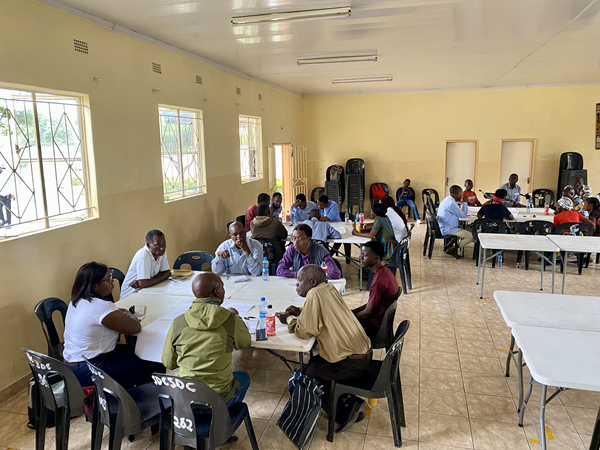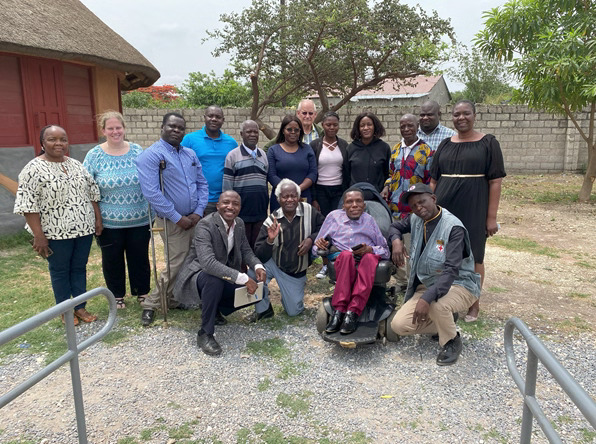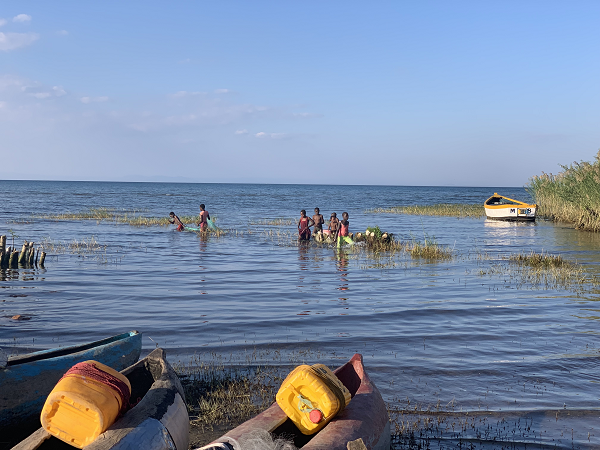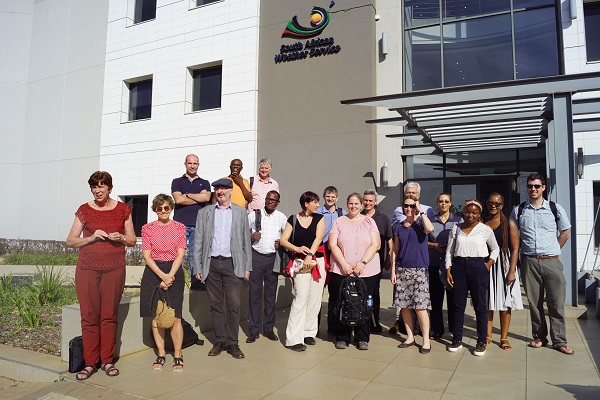
Kulima Integrated Development Solutions, together with partners CSIR and Universidade Eduardo Mondlane, have completed a project on climate change, health, agriculture and disasters analysis in Mozambique. The project, funded by CDKN, comprised 3 work packages: a stakeholder and institutional analysis and scoping study; a qualitative analysis of how projected climate change may influence epidemiology of malaria and diarrhoeal diseases, including fieldwork in 4 districts; and assessing entry points into the existing Mozambican policy context for addressing future risks, taking into account good practice from other countries. The final report is available here.
Category Archives: Projects
Kulima completes project on climate change, health, agriculture and disasters analysis in Mozambique
Kulima begins project to develop plan of action on climate change for Mozambique’s Ministry of Health
Following on from the completion of the CDKN-funded project on climate change, health, disasters and agriculture in Mozambique, Kulima and partners (CSIR and the Universidade Eduardo Mondlane) will continue to support the Ministry of Health (MISAU). The project extension will develop a plan of action and a prioritised and costed policy research agenda on climate change, using a stakeholder consultation that builds on the findings of the first project. The plan of action will build upon the implications of the first study for the forthcoming Health Sector Strategic Plan, whilst the prioritised and costed research agenda should facilitate MISAU and MICOA to better elaborate the health action plan section of the recently-announced National Climate Change Strategy.
Kulima runs first training course on new gender-sensitive Climate Vulnerability Capacity Analysis methodology
Kulima is running the first training of trainers course in Maputo this week on the new gender-sensitive Climate Vulnerability Capacity Analysis (GCVCA) toolkit, developed in conjunction with CARE Mozambique as part of the project on engendering disaster risk reduction. The course will be attended by CARE staff from Angoche and Homoine districts, as well as government representatives from the Ministry of Agriculture, Ministry for Women and Social Action, National Disaster Management Institute and Ministry for the Coordination of Environmental Affairs. GCVCA is a participatory methodology that aims to empower communities as they identify the vulnerability and adaptive capacity of both men and women in the face of climate change, and will be used by CARE in projects in Angoche and Homoine throughout 2013.
Kulima chosen to work with CARE Mozambique on engendering disaster risk reduction project
Kulima Integrated Development Solutions has been chosen by CARE Mozambique as an implementing partner in a BMZ-funded project on engendering disaster risk reduction. Running until 2014, the project will develop new gender-sensitive vulnerability assessment methodologies and train personnel to facilitate their use in participatory vulnerability assessments in Homoine and Angoche districts. After field testing, refinements will be made and the final gender-sensitive toolkit will be used to advocate for gender-sensitive disaster risk reduction. Further training will also be conducted with national and local level government and civil society members in the hopes that gender-sensitive vulnerability approaches become standard in the future.
Kulima and UNIQUE awarded GIZ contract on agricultural adaptation to climate change
Kulima Integrated Development Solutions and UNIQUE Forestry and Land Use have been awarded a GIZ contract on agricultural adaptation to climate change. Forming part of GIZ’s programme of support to the Comprehensive Africa Agriculture Development Programme (CAADP), this project will develop 6 “best practices” on adaptation to climate change for smallholder farmers. These will be elicited through collaboration with regional and national farmer organisations from across the African continent, combined with 3 regional thematic workshops. This collaboration will build on links forged through the Africa Forum, organised by NEPAD to enable knowledge transfer through a variety of continental and regional platforms since 2009. The ultimate aim is to use these best practices to inform national policy and raise the profile of agricultural adaptation on the international agenda.
Dr Katharine Vincent in Buenos Aires for IPCC Lead Authors Meeting
Dr Katharine Vincent is currently in Buenos Aires, Argentina, for the 3rd Lead Authors Meeting of IPCC Working Group 2 on Vulnerability, Impacts and Adaptation. Katharine is serving as a lead author on chapter 9 – rural areas, and a contributing author on chapter 22 – Africa. Ms Tracy Cull is serving as a contributing author on chapter 9 – rural areas. The Fifth Assessment Report will be forthcoming in 2014.
Kulima delivers climate change training course for local government officials in Gaza province, Mozambique
Dr Katharine Vincent and Ms Tracy Cull are in Xai Xai, Mozambique this week, to deliver a two-day climate change training course to local government officials in Gaza province. The training has been commissioned by the Africa Climate Change Resilience Alliance, as part of their second phase of programming. ACCRA is currently working in Guija district in Gaza province, and has found that, whilst there is enthusiasm for addressing climate change issues, effective engagement with the issues is severely impeded by lack of technical understanding and capacity. It is hoped that this training course will enable climate change to be more effectively considered in sub-national planning and development processes.
A blog summarising the training was posted on the ACCRA website on 20th November 2012.
Kulima directors have paper accepted in Information Technologies and International Development
Dr Katharine Vincent and Ms Tracy Cull have had a paper accepted in the journal Information Technologies and International Development. The paper will appear in the spring 2013 edition, volume 9, issue 1, and is entitled ‘”Ten Seeds” How mobiles have contributed to development in women-led farming cooperatives in Lesotho’. It is based upon empirical research with people from the Bishop Allard Vocational School in Roma about how they have achieved development, empowerment and choice since being given 10 mobiles (the “ten seeds”) in 2008. It also argues for a qualitative and longitudinal approach to evaluation of development interventions in order to get a more complete picture.

Kulima quoted in article “Gender relations are changing along with climate”
Share this: