Tag Archives: Mozambique

Kulima begins project to develop plan of action on climate change for Mozambique’s Ministry of Health

MaputoFollowing on from the completion of the CDKN-funded project on climate change, health, disasters and agriculture in Mozambique, Kulima and partners (CSIR and the Universidade Eduardo Mondlane) will continue to support the Ministry of Health (MISAU). The project extension will develop a plan of action and a prioritised and costed policy research agenda on climate change, using a stakeholder consultation that builds on the findings of the first project. The plan of action will build upon the implications of the first study for the forthcoming Health Sector Strategic Plan, whilst the prioritised and costed research agenda should facilitate MISAU and MICOA to better elaborate the health action plan section of the recently-announced National Climate Change Strategy.   


Kulima runs first training course on new gender-sensitive Climate Vulnerability Capacity Analysis methodology

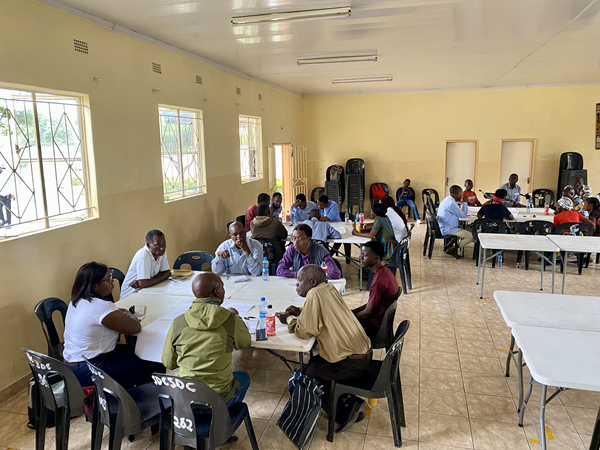
GCVCA trainingKulima is running the first training of trainers course in Maputo this week on the new gender-sensitive Climate Vulnerability Capacity Analysis (GCVCA) toolkit, developed in conjunction with CARE Mozambique as part of the project on engendering disaster risk reduction.  The course will be attended by CARE staff from Angoche and Homoine districts, as well as government representatives from the Ministry of Agriculture, Ministry for Women and Social Action, National Disaster Management Institute and Ministry for the Coordination of Environmental Affairs.  GCVCA is a participatory methodology that aims to empower communities as they identify the vulnerability and adaptive capacity of both men and women in the face of climate change, and will be used by CARE in projects in Angoche and Homoine throughout 2013.

Kulima writes guest blog on Mozambique flooding for CDKN

urban MaputoIn a guest blog, published today on the CDKN website, Dr Katharine Vincent and Ms Tracy Cull outline the extent of flooding from heavy rains in Mozambique, and ask why it is receiving so little media coverage.  The physical magnitude of flooding has reached similar proportions to the year 2000, yet despite this, the international media is barely reporting the issue.  Floods began in mid January in the south of the country (around the Limpopo basin), and have subsequently occurred in the central region (Zambezi basin) and to the north (Cabo Delgado and Niassa provinces), affecting 250,000 people to date.  Mozambique's National Disaster Management Institute has responded, with the assistance of humanitarian partners.

Kulima chosen to work with CARE Mozambique on engendering disaster risk reduction project

Kulima Integrated Development Solutions has been chosen by CARE Mozambique as an implementing partner in a BMZ-funded project on engendering disaster risk reduction.  Running until 2014, the project will develop new gender-sensitive vulnerability assessment methodologies and train personnel to facilitate their use in participatory vulnerability assessments in Homoine and Angoche districts.  After field testing, refinements will be made and the final gender-sensitive toolkit will be used to advocate for gender-sensitive disaster risk reduction.  Further training will also be conducted with national and local level government and civil society members in the hopes that gender-sensitive vulnerability approaches become standard in the future.

Dr Katharine Vincent attends workshop in Mozambique as part of Leeds University CDKN project

Dr Katharine Vincent was invited to participate in a workshop in Mozambique for a CDKN-funded project implemented by Dr Lindsay Stringer, Professor Andy Dougill, and Dr Jen Dyer from the School of Earth and Environment at Leeds University.  The purpose of the workshop was to share emerging findings from the project on assessing institutional and governance partnerships for climate-compatible development in sub-Saharan Africa.  Representatives from the four project countries – Democratic Republic of Congo, Malawi, Mozambique and Zimbabwe were present.  Kulima’s attendance was to identify synergies with our CDKN-funded project on the impacts of climate change on the health sector in Mozambique.

Kulima delivers climate change training course for local government officials in Gaza province, Mozambique

Dr Katharine Vincent and Ms Tracy Cull are in Xai Xai, Mozambique this week, to deliver a two-day climate change training course to local government officials in Gaza province.  The training has been commissioned by the Africa Climate Change Resilience Alliance, as part of their second phase of programming.  ACCRA is currently working in Guija district in Gaza province, and has found that, whilst there is enthusiasm for addressing climate change issues, effective engagement with the issues is severely impeded by lack of technical understanding and capacity.  It is hoped that this training course will enable climate change to be more effectively considered in sub-national planning and development processes.

A blog summarising the training was posted on the ACCRA website on 20th November 2012.

Kulima and CSIR present training course in Mozambique as part of SADC Climate Risk and Capacity project

Dr Katharine Vincent and Ms Tracy Cull, together with Ms Claire Davis from CSIR, are presenting a 3-day training course on the use of weather and climate information in decision-making in Maputo.  The training course forms part of the SADC-regional project, funded by USAID, on Climate Risk and Capacity, which released a recent handbook with new high resolution climate projections and information on impacts and adaptation in the region.  Following a process of needs assessment in March, the course will be attended by national government decision-makers, including directors from a number of ministries, and selected NGO representatives.

Kulima runs expert workshop as part of climate change and health project in Mozambique

Dr Katharine Vincent and Ms Tracy Cull, together with colleagues from CSIR and Universidade Eduardo Mondlane, are preparing for an expert workshop to be held next week in Maputo.  The workshop, to be attended by climate change and health experts, forms an integral part of the CDKN project on climate change, health, disasters and agriculture in Mozambique.  The purpose is to use expert judgement to assess the intersection between future climate projections and current disease prevalence, in order to determine high risks to the health sector from climate change in the future.

Kulima supports CARE in developing a project on water and sanitation in northern Mozambique

Kulima has been supporting CARE International in Mozambique to develop a project on water and sanitation in northern Mozambique.  Mozambique is currently falling short of meeting the Millennium Development Goal on halving the number of people without access to water and sanitation.  Cabo Delgado province, in the north of the country, has the highest levels of child stunting, and regularly suffers from outbreaks of diarrhoeal disease and cholera, particularly in the aftermath of tropical cyclones and floods.  The proposal is based on the use of CARE’s Community Led Total Sanitation methodology to improve access to water and sanitation, and will be rolled out in around 25-30 villages in the province.  The project will last for 3 years, until 2015.

Kulima is in Maputo to launch a new project on climate change, health, disasters and agriculture in Mozambique

Dr Katharine Vincent is currently in Maputo to launch a new project on climate change, health, disasters and agriculture in Mozambique.  The project, funded by CDKN, was requested by the Government of Mozambique, who are keen to fill the data gap in research around how climate change will intersect with health status to create vulnerability to disasters in agricultural communities.  The steering committee comprises representatives from the Ministry of Health (MISAU), Ministry for the Coordination of Environmental Affairs (MICOA), Food Security and Nutrition Secretariat (SETSAN) and the National Disaster Management Institute (INGC).  The project will run from June until December, and is being implemented in conjunction with colleagues at the CSIR and Universidade Eduardo Mondlane in Maputo.