Adaptation Partnership publishes summary of Kulima-organised Western Indian Ocean Climate Change Workshop for Coastal and Marine Protected Areas

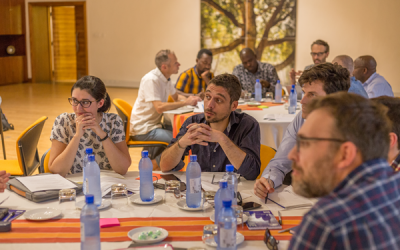
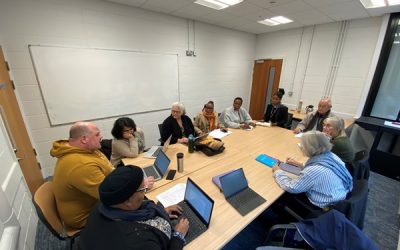
The Adaptation Partnership has released a summary report of the Western Indian Ocean Climate Change Workshop for Coastal and Marine Protected Areas.  The workshop, organised by Ms Tracy Cull, and convened by the United States Agency for International Development and National Oceanic and Atmospheric Administration under the auspices of the Adaptation Partnership, brought together participants from nine Western Indian Ocean (WIO) countries and the United States in February in Cape Town to identify climate change capacity building needs for coastal and marine protected areas in the WIO region.  Presentations from the meeting are available on the Adaptation Partnership website.

Kulima contributes to PROVIA guidance on vulnerability, impact and adaptation assessment

Dr Katharine Vincent and Ms Tracy Cull have been part of the international team of scientific experts assembled to review the guidance on vulnerability, impact and adaptation assessments. The task comprises one of four work streams of PROVIA – Programme of Research on Climate Change Vulnerability, Impacts and Adaptation. The revised guidelines, which will be published in December 2012, will serve as a much needed update of earlier IPCC Guidelines, UNEP Handbook (1994 and 1996 respectively) and other publications. The first draft has gone out for international expert review and comments are sought from interested parties by 30th June 2012.

Kulima and International Development conduct a third round of climate change training at the African Development Bank

Dr Katharine Vincent is again in Tunis where she is part of a team conducting climate change training at the African Development Bank.  The training, focusing on the impacts of climate change on energy and transport, forms part of a series that has been designed and run by Kulima and International Development East Anglia as part of a project to raise awareness of climate change and development issues among African Development Bank staff at a variety of levels.  The first set of trainings, for Executive Directors and Senior Managers, was held in October 2011.  The second set of trainings, for Managers, was held in January 2012 on climate change and agriculture and natural resources.

CDKN launches “Managing Climate Extremes and Disasters: Lessons from the IPCC SREX Report” with comments from Kulima

In honour of the recent release of the IPCC’s Special Report on Managing the Risks of Extreme Events and Disasters to Advance Climate Change Adaptation (SREX), the Climate and Development Knowledge Network (CDKN) has launched a series of reports, “Managing Climate Extremes and Disasters: Lessons from the IPCC SREX Report” covering each of the Asia, Africa and Latin American and Caribbean regions.  Dr Katharine Vincent provided comments on the draft of the Africa report, which aims to pull out state-of-the-art knowledge about current and future impacts of climate extremes, and options for dealing with them, for the benefit of policy-makers, media, businesses and civil society stakeholders.

CODESRIA issues 2012 Call for Proposals

The Council for the Development of Social Science Research in Africa (CODESRIA) invites proposals from researchers based in African universities and centres of research for the constitution of Comparative Research Networks (CRNs) to undertake studies on or around any of the themes identified as priority research themes within the framework of the Council’s strategic plan for the period 2012 – 2016, in its 2012 call for proposals.  Priority research themes for comparative research include Re-thinking (African) Development; Re-thinking Democracy (in Africa); Engendering Democracy and Development; Transitions in African Higher Education; Reforming the African Public Sector: Retrospect and Prospect; the Changing Political Economy of African Natural Resources; African Encounters with the Global System; the Popular Arts, Identity and Culture in Contemporary Africa; Health, Politics and Society in Contemporary Africa; Migration Dynamics and the Making of New Diaspora Communities; Changing Rural-Urban Linkages; African Integration and New Regionalist Impulses in Africa; New Institutions of Transitional Justice; Conflict and Reconstruction in Africa; Law, Politics and Society; State, Political Identity and Political Violence; Political Pluralism and the Management of Diversity; Water and Water Resources in the Political Economy of Development; Ecology, Climate and Environmental Sustainability in Africa; Transport and Transportation Systems in Africa; Africa and the “Emerging” Powers of the Global South (China, India, Brazil…); Religion, Spirituality and Power in Africa; Democracy and Governance in Africa; Media and New technology of information and communication in Africa; Agrarian transformation; Crises of Education; Roles and dynamics of critical actors; Critical Thought, epistemologies of knowledge production, theories and methodologies.  More information on the format of the proposal is available on the CODESRIA website.  For the 2012 CRN competition, CODESRIA will be open to receive proposals up to 15th June 2012.

Kulima undertakes climate capacity building needs assessment in Mozambique

Last week Dr Katharine Vincent was in Maputo to meet with government and non-government representatives to assess the needs for climate capacity building in the country.  The needs assessment is a key component of the USAID-funded project on Climate Risk and Vulnerability in southern Africa, where customised training will be designed and run to promote the use of weather and climate information in decision-making.  As well as Mozambique, the project will take place in Mauritius, Namibia, Zambia and Zimbabwe.

Kulima paper presented at Planet Under Pressure conference in London

Building on their recent collaborations, Kulima and CSIR are presenting a paper at this week’s Planet Under Pressure conference in London.  The paper, entitled “Bridging the Gap: Experiences of communicating climate information between producers and end-users in southern Africa”, highlights our experience in communicating information around climate change to humanitarian actors, through the development of a two-way dialogue highlighting needs and opportunities.  The paper forms part of a parallel session on “Making climate science useful: effective dialogue between climate scientists and humanitarian and development ‘end users’”.

FAO and CCAFS release gender, climate change and food security training guide, with Kulima inputs

FAO and Climate Change, Agriculture and Food Security (a research programme of CGIAR) have released a new training guide entitled “Gender and Climate Change Research in Agriculture and Food Security for Rural Development”, on which Kulima commented during its development.  The manual sets out to provide users with resources and participatory action research tools for collecting, analyzing and sharing gender-sensitive information about agricultural communities, households and individuals who are facing climate changes.  It then provides some techniques for understanding and promoting climate-smart agricultural techniques.  Participants from Bangladesh, Ghana and Uganda have already been trained in the techniques and applied them in their own countries.  Their experiences were recently reported in the CCAFS blog.

2nd Nordic International Conference on Climate Change Adaptation announces Call for Papers

The Second Nordic International Conference on Climate Change Adaptation: “Adaptation Research Meets Adaptation Decision-Making” will be held in Helsinki, Finland on 29-31 August 2012. The Call for Abstracts (deadline Friday 30 March 2012) and Registration details can be found at the Conference website.

The Conference seeks to identify common ground between adaptation research and adaptation decision-making by comparing experiences, reporting new insights and revealing key gaps in knowledge. Some of the other questions being asked include:
  • Many countries have developed climate change adaptation strategies, but do decision-makers really have the appropriate information, expertise and tools available to them to implement adaptation decisions?
  • What adaptation research is underway and where is information currently lacking?
  • Is it more sensible to wait and see what happens, or to implement adaptation measures right away?
  • How should adaptation policies be targeted – where are they needed most and who should be responsible for implementing them?
  • Do the adaptation decisions of today need to be effective in 30 years time? In 100 years time?
  • What is the cost of climate change to the environment and society, how do we measure that cost and who foots the bill?

Kulima undertakes climate capacity building needs assessment in Zambia

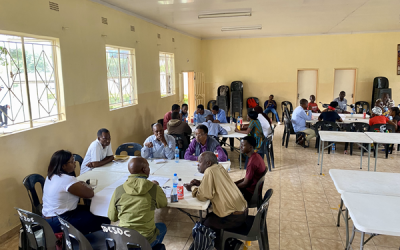
Last week Dr Katharine Vincent was in Lusaka to meet with government and non-government representatives to assess the needs for climate capacity building in the country.  The needs assessment is a key component of the USAID-funded project on Climate Risk and Vulnerability in southern Africa, where customised training will be designed and run to promote the use of weather and climate information in decision-making.  As well as Zambia, the project will take place in Mauritius, Mozambique, Namibia and Zimbabwe.