
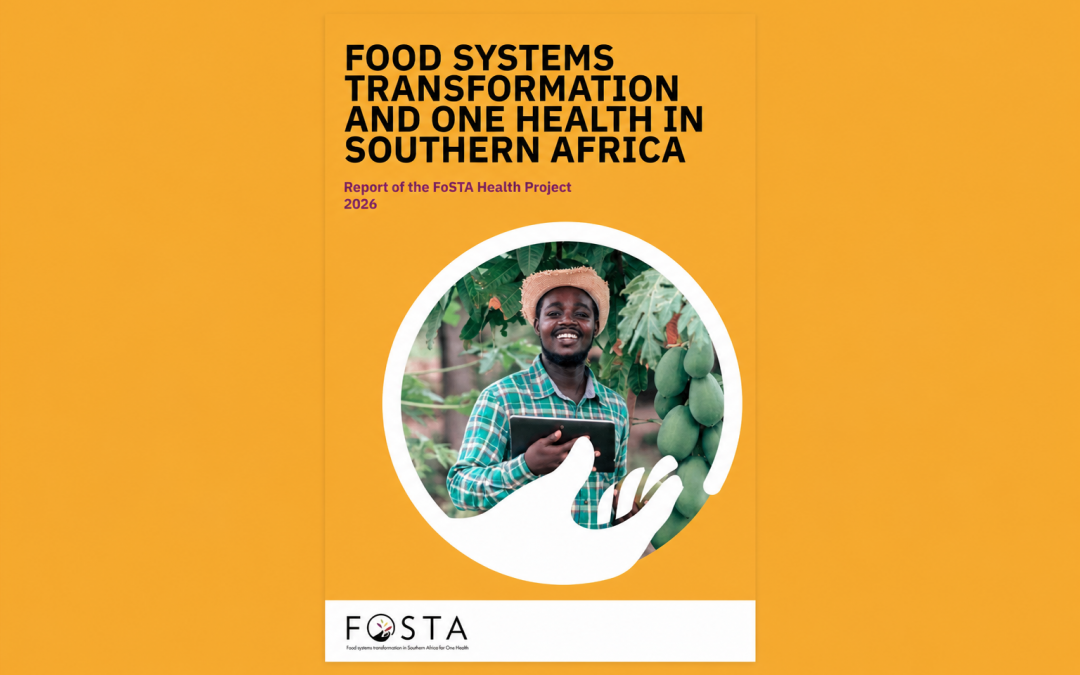
The Food Systems Transformation in Southern Africa for One Health (FoSTA-Health) project has now published its final report, with inputs from Kulima. FoSTA-Health is a multi-country, transdisciplinary project focused on food systems change in Malawi, South Africa, Tanzania and Zambia, and it is co-led by the University of Leeds and Wageningen University and Research, with a wider consortium of partners from Europe and Africa that includes Kulima Integrated Development Solutions. Kulima’s role in the project has centred on stakeholder engagement across the four focal countries and on supporting the identification of equitable transformation pathways and system leverage points.
The final report marks the end of FoSTA-Health, and reflects on the implications of different food system transformation pathways for One Health outcomes. It uses Representative Transformation Pathways developed through iterative engagement with stakeholders between 2023 and 2025, and assesses how these may shape future food systems to 2050. Four broad pathway families are identified (with each country having a unique set): market-oriented pathways, diet and demand-oriented pathways, farming system and landscape-oriented pathways, and equity and local aspirations-oriented pathways. Each pathway involves trade-offs across nutrition, livelihoods, environmental sustainability and health, and that these trade-offs are shaped by structural inequalities, climate variability, market integration and dietary choices.
Policy choices around pathways arise out of current challenges in the region: persistent undernutrition and micronutrient deficiencies alongside rising consumption of ultra-processed foods, unequal access to land, finance and markets, and exposure to pests, zoonoses and agrochemical risks. Food systems transformation will require coordinated action across sectors and stronger implementation of the emerging One Health policy frameworks. Priorities identified include inclusive and climate-resilient value chains, stronger food safety and regulatory systems, healthier food environments, agroecology and sustainable land and water management, and approaches that centre women, youth and local aspirations.